

Explosive Proliferation of Roads Is Imperilling Tropical Nature
Written by William Laurance & Jayden Engert
April 13, 2026
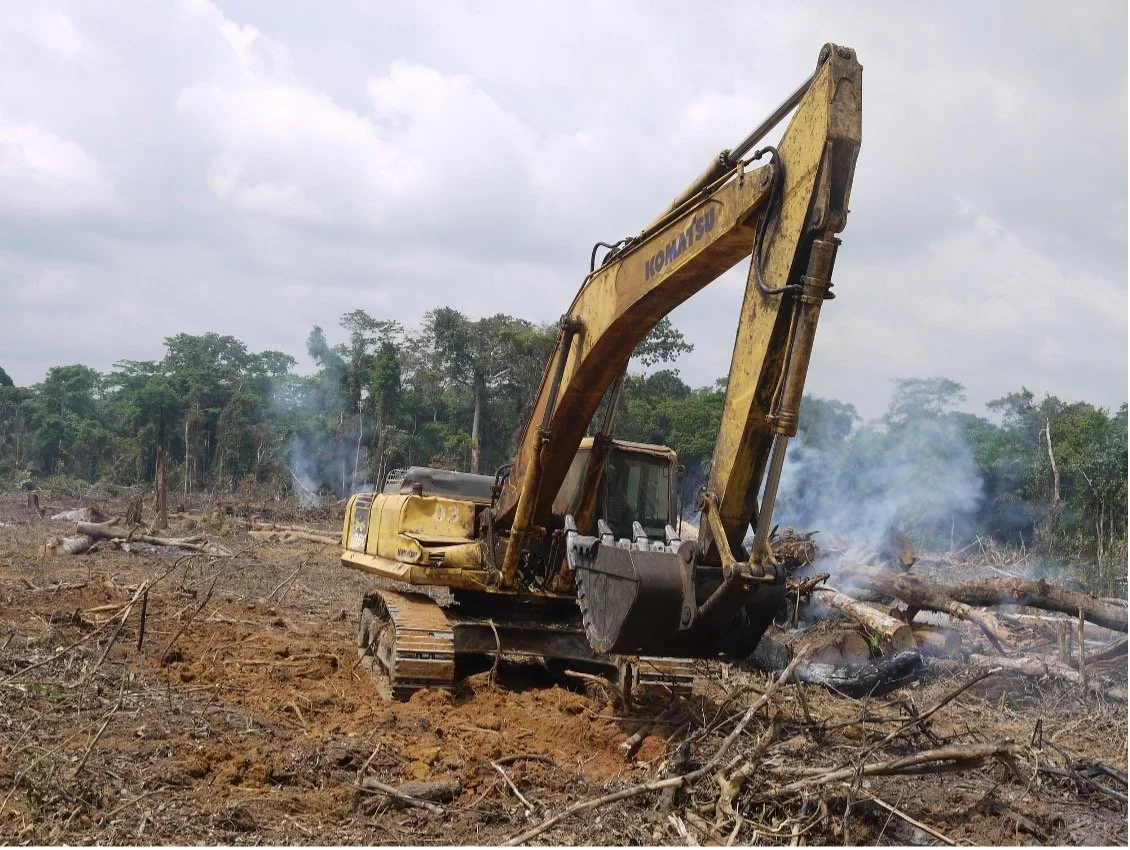
Road expansion and deforestation in the tropics
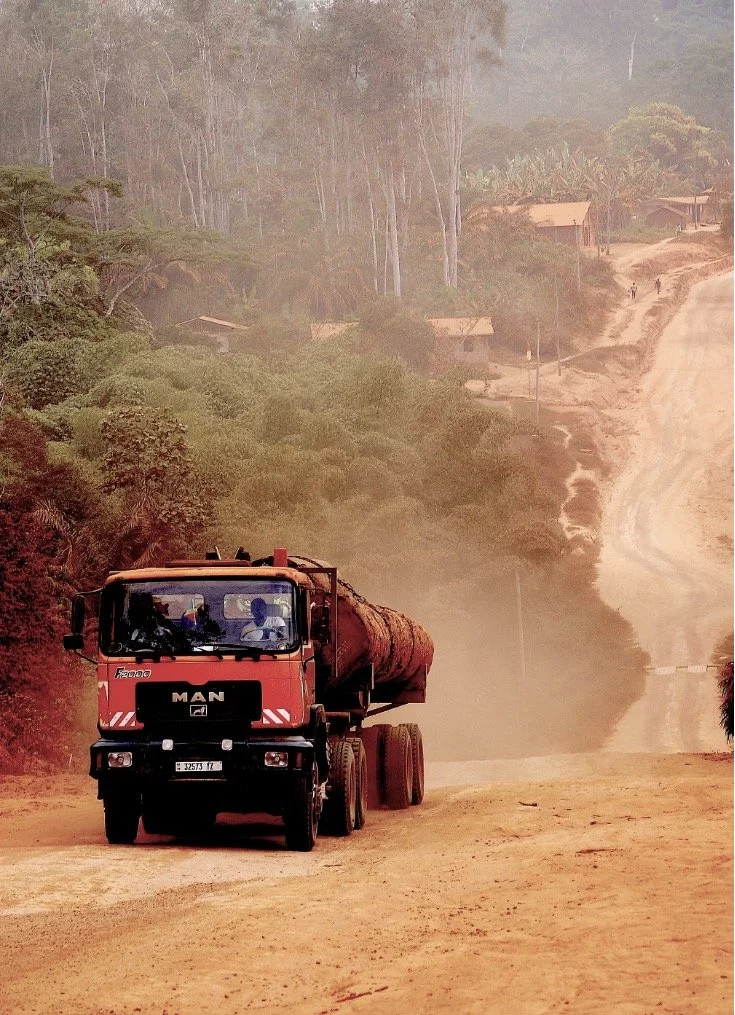
Figure 1. Harvesting of old growth forests, as shown here in Cameroon, is facilitated by an already extensive, and expanding, road network. Photo by W.F. Laurance.
Roads act as conduits for human incursions and hence underlie many of humanity’s impacts on nature, including deforestation, wildfires, poaching and natural-resource overexploitation. Unfortunately, existing roadmaps often drastically underestimate the true extent of road networks and future predictions of road-related impacts rely on incomplete and outdated data, undermining development planning and conservation decision-making.
Index of road-expansion risk
We devised a multivariate “road expansion risk” index to identify tropical areas prone to road building and therefore vulnerable to road-related environmental impacts. Using a massive road dataset—137 million 1-ha raster cells drawn from three different sources arrayed across the Amazon and Congo basins and the Asia-Pacific region — we predicted road-prone locations via a statistical model that integrates a range of biophysical, socio-economic and administrative data.
Predicting forest vulnerability
Our highly integrative, large-scale approach allowed us to identify areas likely to experience future road building and regions that may contain unmapped roads. Importantly, our road-expansion risk index is a strong predictor of forest loss and degradation and can hence identify future road building and deforestation hotspots, even for the many forest locales with grossly deficient road data — which unfortunately is a common occurrence in developing nations of the tropics.
Our predictive approach has applications for impact-assessment procedures for road projects, improving environmental decision-making. These findings provide key insights into the potential scale and extent of forest loss and degradation that will emerge with proposed roads and development corridors in the world’s largest surviving tropical-forest regions.
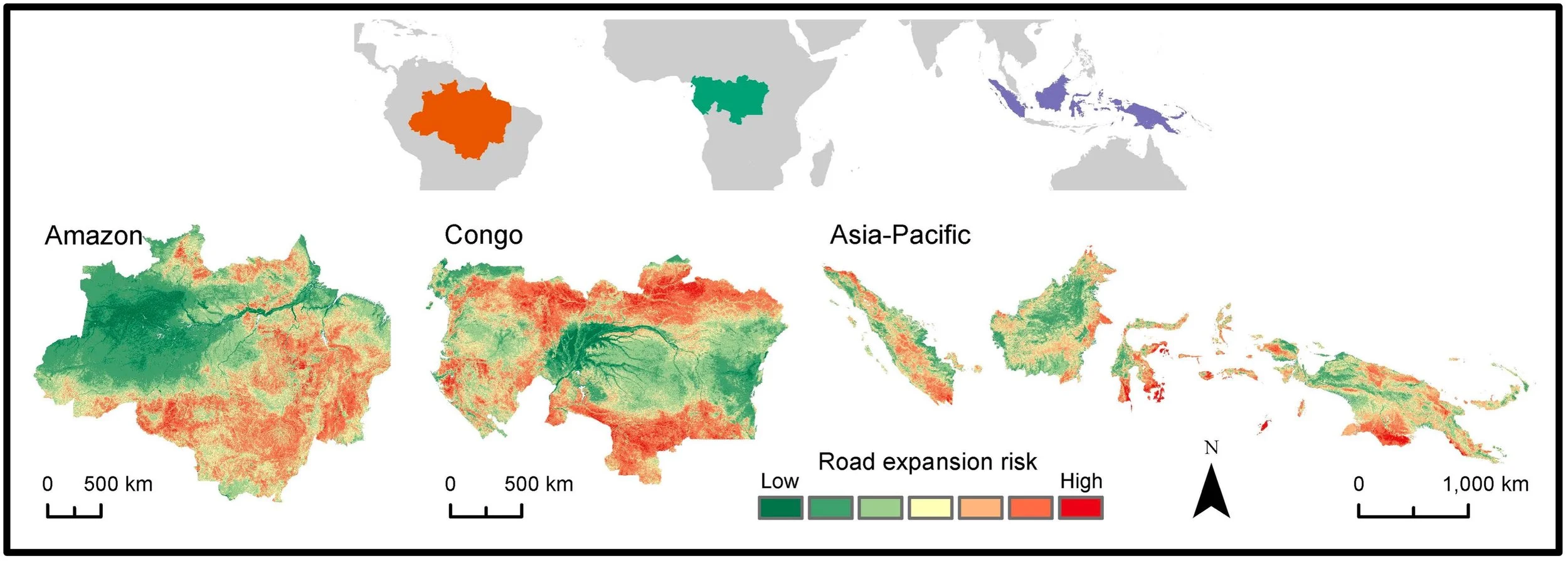
Figure 2. Map showing the ‘road expansion risk’ in the Amazon Basin, the Congo Basin and the Asia-Pacific region. Areas in red and yellow are at the greatest risk of new and upgraded roads in the future.
Author information
William Laurance is a Distinguished Research Professor and director of the Centre for Tropical Environmental and Sustainability Science at James Cook University in Cairns, Queensland, He founded and directs ALERT—the Alliance of Leading Environmental Researchers & Thinkers—an international scientific organization that promotes environmental sustainability in the tropics and beyond.
Jayden Engert is a postdoctoral researcher at the Max Planck Institute for Animal Behavior in Konstanz, Germany, and a former PhD student in Laurance’s lab.
Source citation
Engert, J., et al. 2025. Road expansion risk predicts future hotspots of tropical deforestation. Proceedings of the National Academy of Sciences USA 122:e2502426122; https://doi.org/10.1073/pnas.2502426122.
Editor:
Rodney van der Ree
Cite this summary:
Laurance, W. & Engert, J. (2026). Explosive Proliferation of Roads Is Imperilling Tropical Nature . Edited by van der Ree, R. TransportEcology.info, Accessed at: https://transportecology.info/research/roads-imperil-tropical-nature