

Unpaved roads connect scrub lizard habitat
Written by Joshua Rapp Learn
April 7, 2026

This article is re-published from The Wildlife Society.
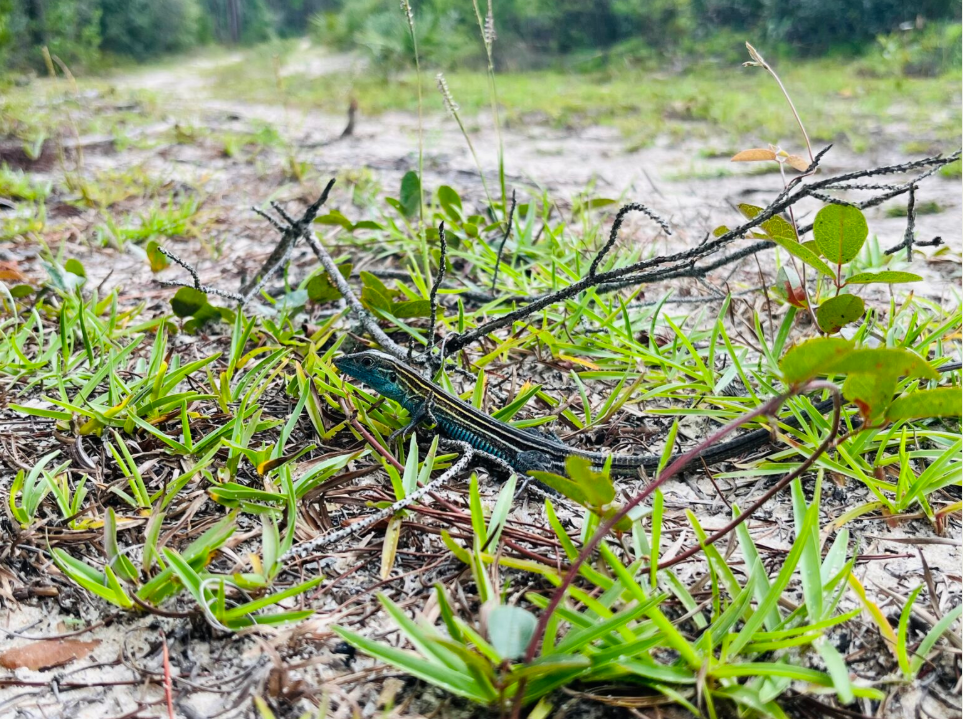
Researchers surveyed six-lined racerunners and other lizards. Credit: David Tevs
Unpaved roads in northern Florida may provide ecological corridors for scrub lizards in areas where timber harvest has interrupted the forest regrowth cycle.
“[The unpaved roads] are going to allow these lizards to persist in these mature stands managed for wood pulp,” said David Tevs, a PhD student at the University of Montana.
Tevs and his colleagues conducted a study published recently in Ecological Research, revealing that some ways humans change the environment can make up for the problems they cause.
Road work
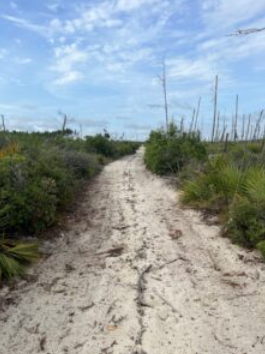
Scrub lizards are currently under consideration for listing under the U.S. Endangered Species Act. Credit: David Tevs
Tevs and his colleagues started off conducting work on lizard physiology in Ocala National Forest in northern Florida. They were running surveys along unpaved roads that cut through the forest, much of which is managed for wood pulp timber harvest, to answer questions about variations in diet and rates of parasite infection. These roads were a combination of old logging roads, forest management access roads and roads for recreational ATVs or dune buggies. They saw way more lizards along these sandy roads than they did deeper in the forest. Since they kept careful field notes, they realized they could also use the data to conduct a study on the relative abundance of lizards in different types of ecosystems in Ocala, including on these roads.
The team examined the data for the presence of three lizard species: Florida scrub lizards (Sceloporus woodi), green anoles (Anolis carolensis) and six-lined racerunners (Aspidoscelis sexlineatus). Florida scrub lizards are currently under reviewfor potential listing under the U.S. Endangered Species Act (ESA), partly because the scrub ecosystem that they prefer has also been declining in Florida due to development and habitat change.
The team confirmed what they had anecdotally seen during surveys. More scrub lizards occurred on the roads than deeper into the forest. “These roads seem really critical, particularly for the Florida scrub lizards,” Tevs said.
Tevs said their occurrence on the roads, which vehicles rarely use, is likely because sunny patches and smaller plants on the roadside allow the lizards to regulate their temperatures. They can also hide quickly in the sandy soil in these areas from predators. All of this helps them to move between warmer and cooler microclimates as they need.
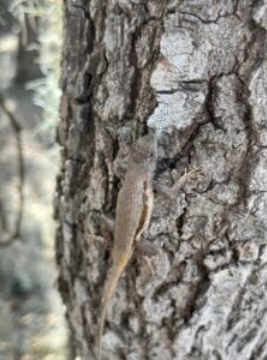
Scrub lizards are currently under consideration for listing under the U.S. Endangered Species Act. Credit: David Tevs
In a way, the unpaved roads provide habitat like early successional forests—the kind that grow back within the first five to seven years after wildfires. But since timber harvesters mostly let trees reach maturity before harvesting them for pulp, the region doesn’t see the kind of ecological recycling that burns would provide.
Tevs said that the roads also likely provide habitat connectivity between suitable areas.
However, he cautioned that the unpaved roads may have negative effects on other aspects of ecology in these forests. Some research shows that they help nonnative grasses spread, for example, and researchers speculate that nonnative brown anoles (Anolis sagrei) may use them to disperse.
But these roads may also help other species like gopher frogs (Lithobates capito), another species currently under review for listing under the ESA, disperse during breeding season.