

Written by Adam Bennett
August 27th, 2026
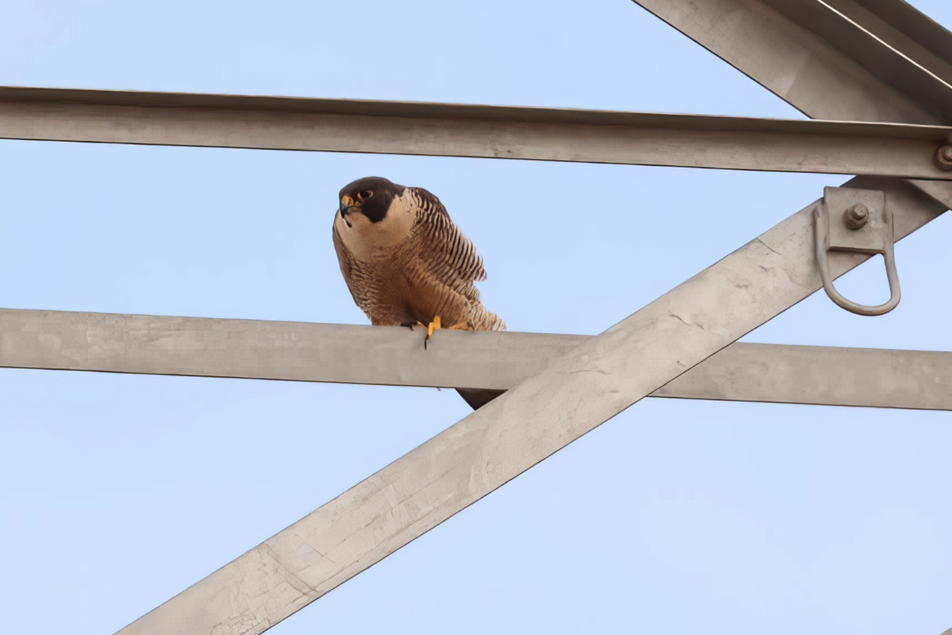
Figure 1: Peregrine Falcon (Falco peregrinus) using a pylon as a resource by searching for prey.
Why power lines?
Electrical infrastructure is expanding fast, with an estimated 80 million km² of new power lines projected by 2040 around the world as countries build out renewable energy and low-carbon grids. For wildlife, power lines (any cable used to distribute electrical power) cut both ways: they are a direct cause of mortality through collision and electrocution, but they also provide popular perching and nesting sites, in open landscapes actually boosting availability. We reviewed the scientific literature to map out how these specific factors have been studied, what emerges from the evidence, and what we still don’t know.
Geographic and Taxonomic Bias
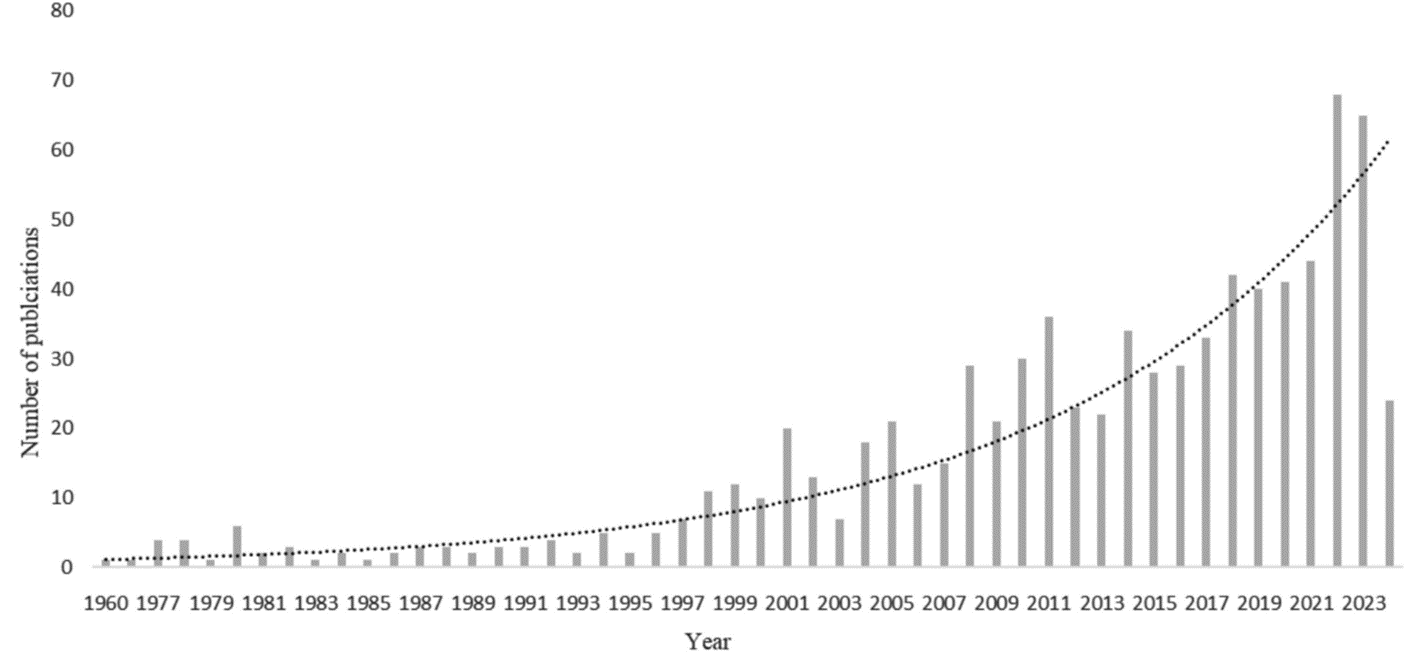
Figure 2: Research output over time in regard to electrical infrastructure impacts on animal diversity.
Research on this topic has grown rapidly over the past 25 years, but it is heavily skewed. Most studies focus on negative impacts—collision and electrocution—partly because these are the easiest to measure and compare. Most also come from a handful of countries: Australia, Canada, India, Norway, Portugal, Spain, South Africa, the UK and the USA. Birds and mammals dominate these studies, while very little known about continental- or global-scale impacts, reflecting a lack of strategic investment.
Mortality estimates vary wildly. In the USA, for example, published figures for bird deaths from power lines range from 12 to 64 million per year. This wide spread reflects the difficulties of combining studies using different methods, as well as patchy data collection, and access to proprietary survey data and private reports. Although unacceptably high, it is far smaller than impacts that are better studied—in many regions, pet cats and cars kill far more wildlife each year.
Who's Most at Risk
When it comes to which groups of birds are more susceptible to collisions and electrocutions, size matters. Large-bodied and large-winged birds are consistently highest in direct mortalities, with population-level impacts found for Bonelli´s Eagle, the Eurasian Eagle Owl, the Indian Bustard, Ludwig´s Bustard and the Spanish Imperial Eagle. Very little population-scale work has been conducted on smaller-bodied animals, with amphibians, gastropods, insects and reptiles largely unstudied. Noting the higher levels of diversity and endemism in these less dispersive groups, impacts at the species level will be more difficult to detect and should be the focus of focussed work.
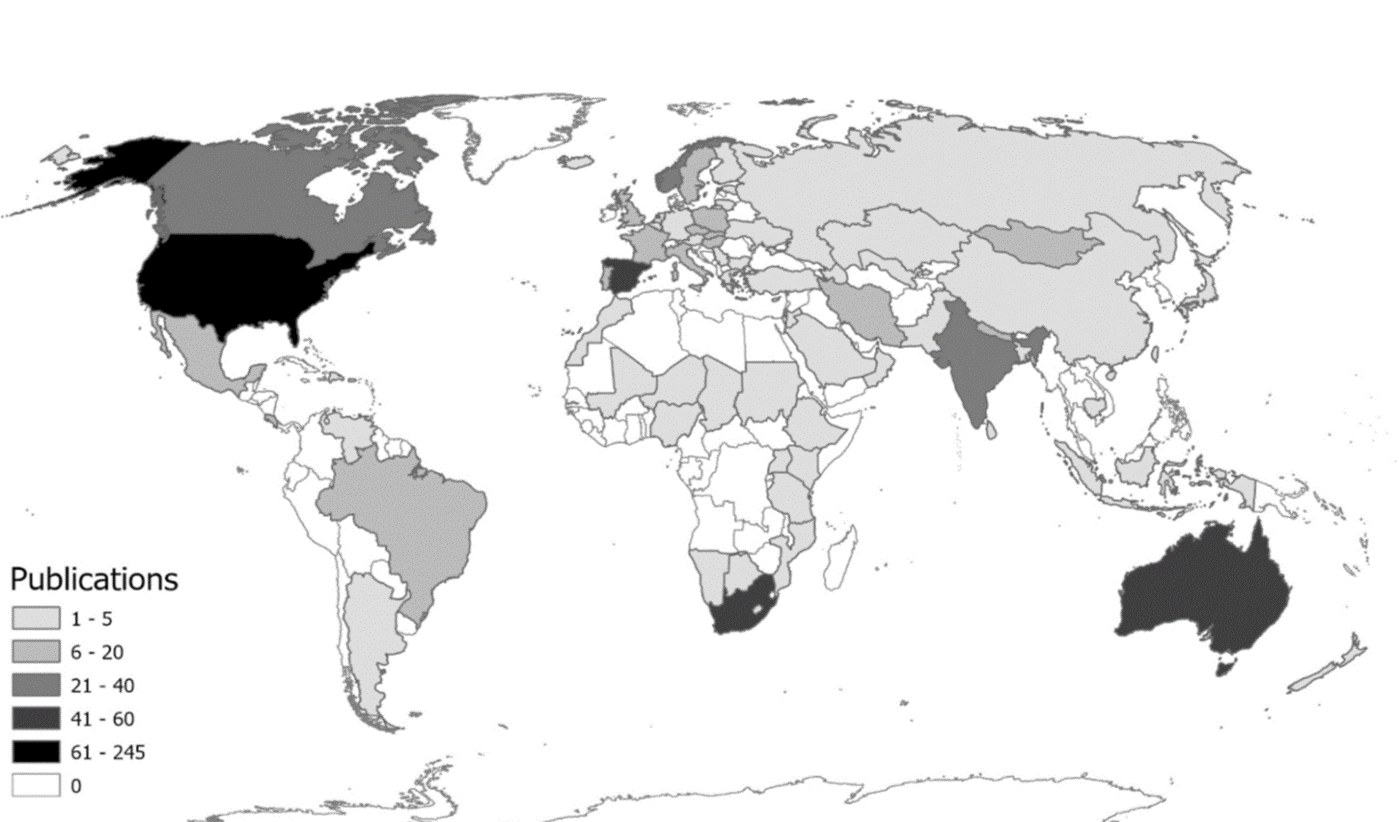
Figure 3: Research output by country – darker shades indicate greater output.
Hope remains!
As well as these known direct impacts, what about the benefits? Power lines and pylons provide real habitat value for many groups, including storks, larger birds of prey and corvids by offering nesting and perching structures, representing the only elevated perches in many landscapes. Simple mitigation measures—such as flight diverters and insulated conductors to reduce the risk of electrocution—can help make powerline arrays more easily detectable to flocking birds, especially during migration. And add purpose-built platforms to pylons to encourage the building of nests can boost these benefits further. But this side of the story is much less studied. To understand the population-scale effects of these additional structures requires long-term investment to enable before-and-after monitoring around new infrastructure in a range of contexts. Until then, anecdotal reports provide a rich preview of the breadth of species, contexts, and structural elements involved.
What we don’t know
Several potential ecological impacts on wildlife populations and ecological communities remain almost entirely unstudied, including electromagnetic fields, noise, habitat fragmentation from clearing, ultraviolet radiation from electrical infrastructure, indirect impacts of easements on predators and parasites. These are top priorities for dedicated research, exploring both mechanistic pathways through controlled experimentation, and quantifying real-world impacts through populations-scale monitoring.
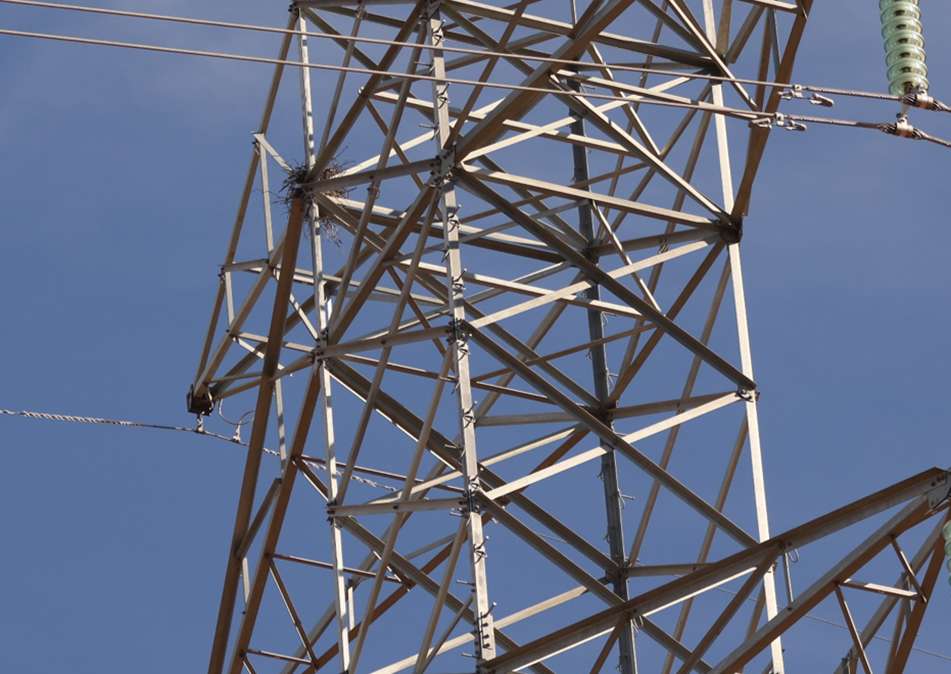
Figure 4: Nest of an Australasian Raven on a pylon in a treeless plain.
What is required
Power line expansion is happening rapidly, and underpins the urgent need to decarbonise our economy. The good news is, the fixes needed to protect wildlife are within reach. Three things make the greatest difference. First, future studies must extend beyond birds and mammals and expand upon collision and electrocution, particularly in biodiversity-rich regions facing rapid energy growth. Second, ecologists and impact assessors should be involved early—from initial planning stage through to operation—rather than midway when the impacts are often irreversible. Third, research needs to move beyond isolated, single-region or -country studies toward coordinated projects. Obvious starting points are defined by mapped migratory flight paths. Rather than national borders, they tend to coincide with regions of predictably high wind. As we improve these flyways, we’ll get better at sustainable energy development, finding new ways to support conservation and safeguard ecosystems.
Author information
Adam Bennett, Adam is a PhD student at Charles Sturt University studying the impacts of electrical infrastructure on animal diversity. He has worked as a field ecologist and environmental consultant in national and international projects. He holds a Master’s in Applied Ecology and a Bachelor’s degree in Conservation Biology.
Contact Email: adbennett@csu.edu.au
Source citation
AJ Bennett, DM Watson & MJ Watson (2025). Positive and negative impacts of electrical infrastructure on animal biodiversity: A systematic review. Oecologia 207, 142 (2025). https://doi.org/10.1007/s00442-025-05780-7
Disclaimer – This research was conducted as part of a wider PhD investigating the impact of electrical infrastructure on animal diversity in a cross-collaborative effort between Charles Sturt University and TransGrid. This project is altruistic in scope, and the authors declare no competing interests. This research was self-directed and was not influenced by any sponsoring organization, funder, or third party.
Editor:
Rodney van der Ree
Cite this summary:
Bennett, A. (2026). Impacts of electrical infrastructure on birds: direct and indirect effects, knowledge gaps and priorities. Edited by van der Ree, R. TransportEcology.info, Accessed at: https://transportecology.info/research/impacts-of-electrical-infrastructure