

Restoring a Benchmark: How Community, Council, and Science Revived the Compton Road Wildlife Overpass
December 8, 2025

Compton Rd drone shot by Rob Appleby and Douglas Kerlin Applied Transport Ecology Group Griffith University
In the early 2000s, Brisbane City Council made history with the construction of the Compton Road fauna array – one of Australia’s first purpose-built wildlife overpasses, complemented by a network of underpasses, glider poles, and rope ladders. Strategically located between Kuraby Bushland and Karawatha Forest, the array was designed to reconnect fragmented habitats within the Flinders–Karawatha Corridor: the largest remaining stretch of continuous forest in southeast Queensland.
Over time, the site became a global case study in effective fauna-sensitive road design, inspiring infrastructure projects well beyond the region. But like all infrastructure, ecological or otherwise, it required continued care – something that began to slip as the years passed.
A Structure in Need of Care
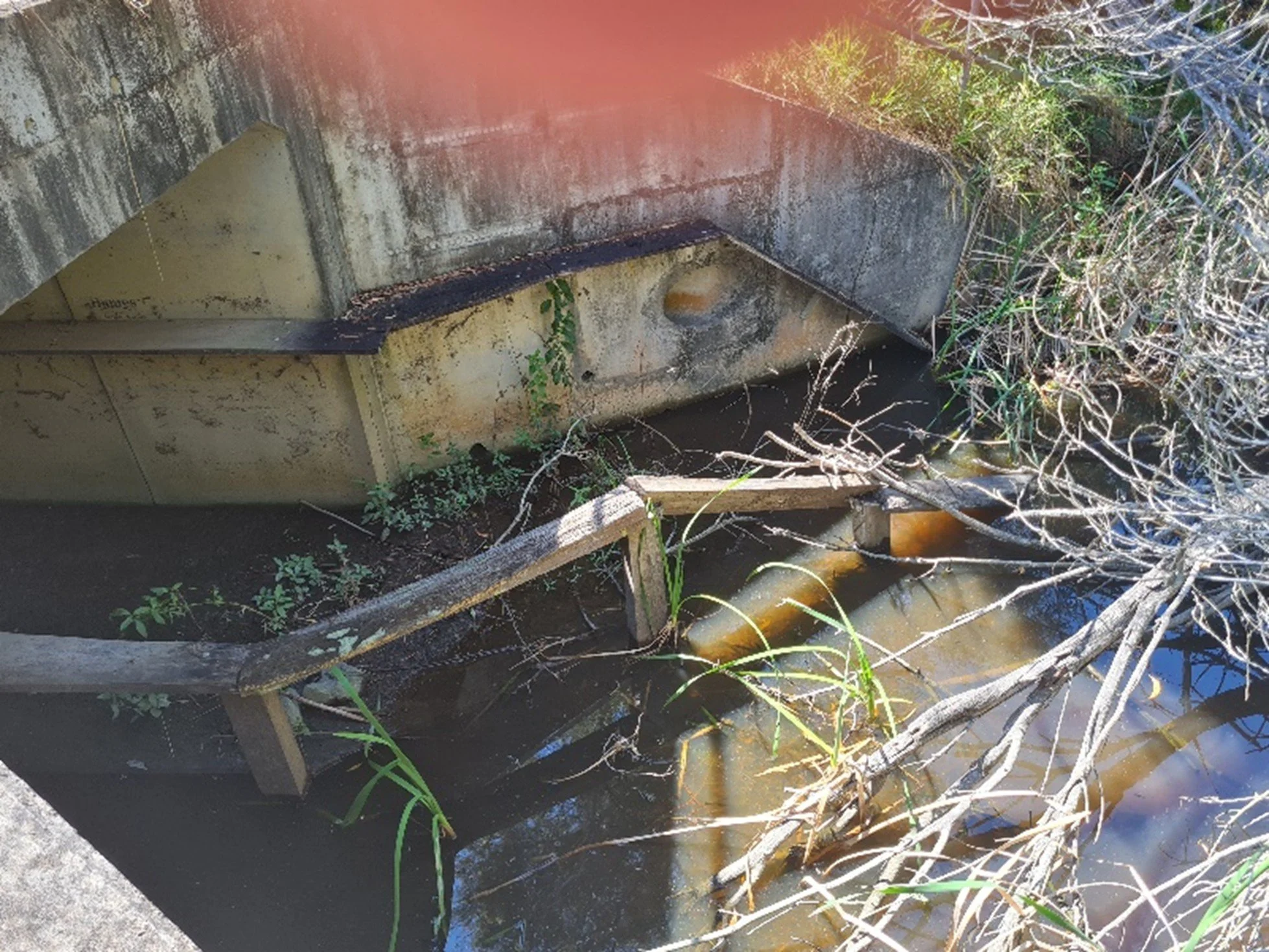
Some of the retrofitted 'dry' underpass culverts were found to be flooded, with damaged wildlife furniture in need of replacement.
By the late 2010s, signs of decline had begun to emerge. Field surveys conducted in 2018 and 2021 revealed multiple issues that, while not catastrophic on their own, were beginning to undermine the structure’s long-term functionality:
● A loss of vegetation complexity, especially in the understorey
● Erosion of slopes due to poor soil structure and reduced groundcover
● Deterioration of wooden fauna furniture in underpasses
● Weeds, water, and sediment accumulation at dry culvert entrances
These seemingly minor declines had a compounding effect. Without a dense lower vegetation layer, many small birds, reptiles, and mammals avoid crossing altogether. And when culverts are blocked or hold water, they cease to function as dry passageways for ground-dwelling species. Gradually, the ecological linkage that the array was built to support began to erode.
A Community-Driven Solution
Recognising what was at stake, the Karawatha Forest Protection Society and the Bulimba Creek Catchment Coordinating Committee – longstanding advocates for the corridor – commissioned a restoration and enhancement plan. The report, authored by a transport ecologist, drew on field surveys, ecological research, and collaborative input from both industry and community stakeholders.
Rather than recommending a complete overhaul, the plan focused on targeted, practical interventions to restore ecological function. These included:
● In-fill planting of 500+ native tubestock to rebuild understorey vegetation
● Habitat enhancements using logs, rocks, and mulch for shelter and structure
● Water retention measures, including mulch, water crystals, and trucked irrigation
● Soil inoculation with microbial treatments to boost fertility and resilience
● Structural repairs to degraded underpass/culvert elements
● Follow-up maintenance, including watering and weed control
The strategy was clear: restore function, not just form. And do it with foresight, care, and the backing of those who understood the site’s ecological significance best.
From Report to Reality
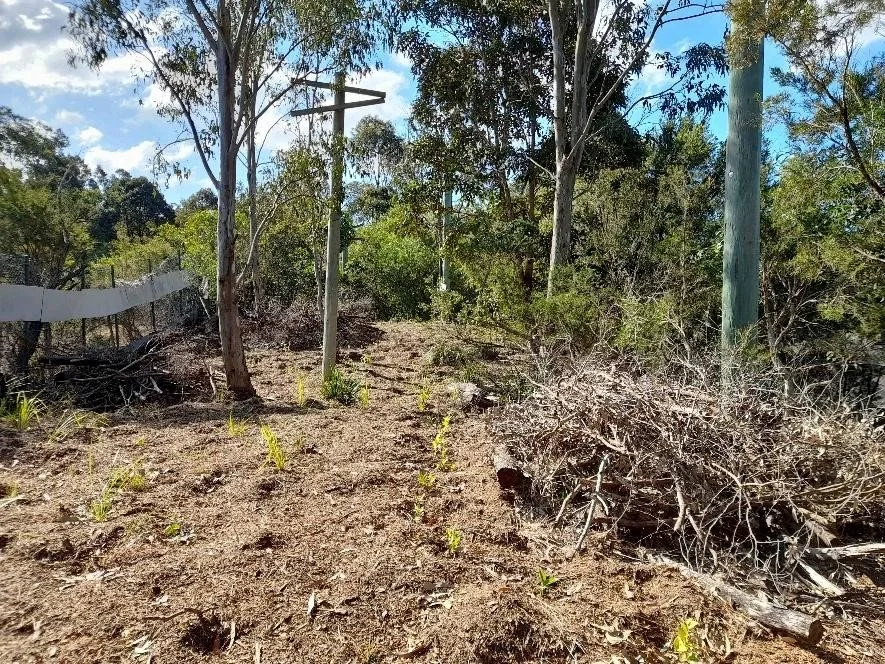
What followed was a rare and encouraging example of ecological advice translating directly into action. Brisbane City Council committed to the project, coordinating with bushland managers and community groups to deliver the recommended works. In a particularly striking show of support, a local councillor – impressed by the strength of the report and the clarity of its case – allocated discretionary funding to fully finance the restoration of the overpass component. The science spoke for itself, and the timing was right.
Just as importantly, the report helped spotlight the broader risks of neglect. It became a catalyst for deeper engagement, prompting Council to commission additional condition audits of the site’s ancillary infrastructure. Minor rectification works on the rope bridges and ladders were completed, and planning is now underway to address issues with culvert function.
Encouragingly, conversations about long-term monitoring and maintenance are no longer on the margins – they’re being treated as core business.
Reflections from the Field
Today, the Compton Road overpass is widely recognised as one of the most studied wildlife crossing structures in the world. A substantial body of peer-reviewed publications and government reports has documented its use by birds, mammals, reptiles, and bats.
In Australia, it stands as a benchmark for road mitigation infrastructure. For many species, it has effectively neutralised the ‘road barrier effect’ – transforming a once-hostile boundary into a seamless extension of forest. It’s one of the few places in an urban landscape where the road, ecologically speaking, almost disappears.
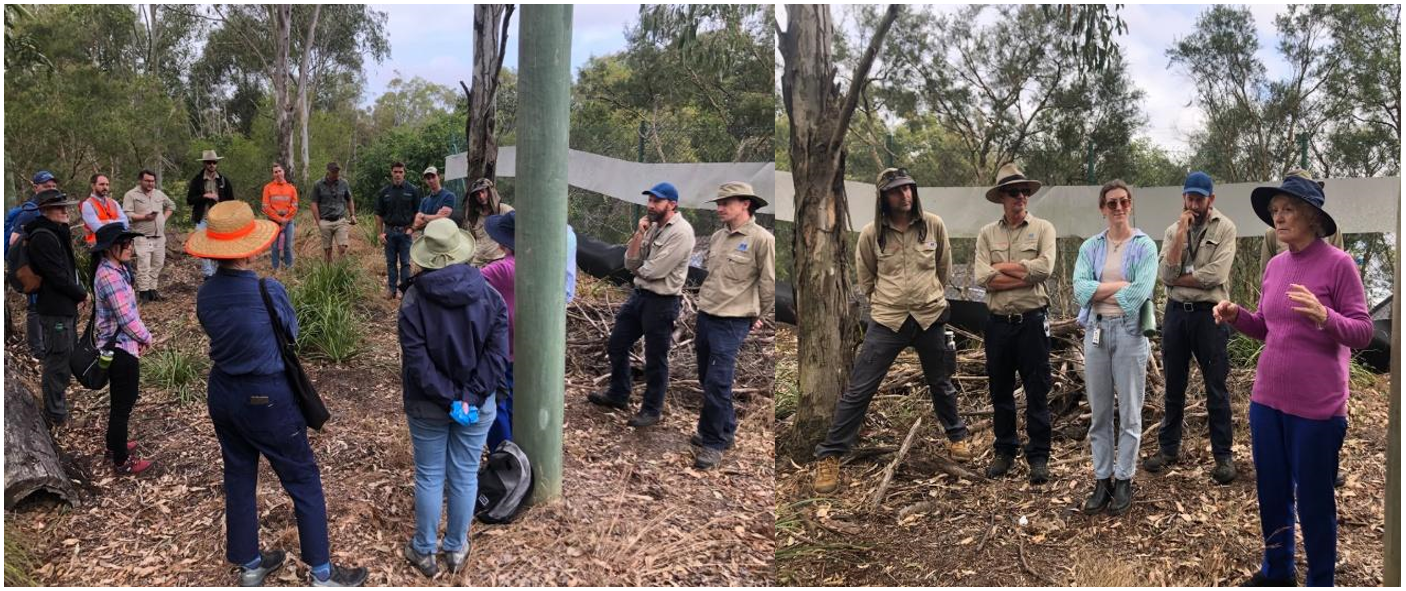
But the site’s greatest value may lie in its role as a living classroom. Ecologists, engineers, planners, and students continue to visit and study the structure – observing what works, identifying what doesn’t, and informing the design of future wildlife infrastructure. In 2024, the site again served as a focal point for a Brisbane City Council working group field trip exploring ways to strengthen connectivity across the city’s transport network.
Yet the story carries a note of caution. Without sustained investment in monitoring and maintenance, even flagship sites like Compton Road risk slipping back into disrepair. And this isn’t a localised problem – underinvestment in fauna infrastructure upkeep is widespread across Australia, with only a handful of jurisdictions embedding condition audits into their asset management systems.
Still, there are signs of positive momentum. Brisbane City Council is now planning culvert desilting and vegetation works, with delivery likely to occur in-house. Most importantly, the discussion around long-term stewardship has shifted – from ‘if’ it should happen to ‘how’ and ‘when’ it will be done.
The Compton Road overpass remains a success story. But like all infrastructure that matters, it needs people to keep it working.
Lessons for Future Projects
● Design is just the beginning – without sufficient funding and planning for maintenance, even benchmark structures decline.
● Science + community = influence – restoration succeeds when grounded expertise is backed by advocacy.
● Timing is everything – influence is strongest when delivered before decisions are locked in.
● Policy wins can start local – a single councillor’s action created ripple effects far beyond the site.
● Stewardship matters – infrastructure that supports biodiversity must be actively managed over time.
● Short-term fixes need long-term systems – without embedded auditing and maintenance, today’s restoration may become tomorrow’s rediscovery project.
Authored by: Christopher Johnson
Edited by: Rodney van der Ree & Melissa Butynski
Contributors: Transportecology.info would like to thank the Brisbane City Council’s Natural Environment Officers for generously contributing their time, insight, and on-ground experience to the development of this case study.
Acknowledgement of the use of Generative AI Tools:
The author acknowledges the use of the Generative Artificial Intelligence (GenAI) tool ChatGPT (OpenAI, 2025 – GPT-5 model) to assist in the preparation of this case study. GenAI was used solely for editorial and facilitative purposes, including improving clarity, structure, grammar, and conciseness. At all times, intellectual responsibility and authorship remain with the author. No part of the content was generated without their original input, oversight, and verification.
Further reading:
McGregor M., Wilson S., and Jones D. (2015). Vegetated overpass enhances habitat connectivity for forest dwelling herpetofauna. Global Ecology and Conservation. 4: pp. 221-231.
McGregor, M., Matthews, K., and Jones, D. (2017). Vegetated Fauna Overpass Disguises Road Presence and Facilitates Permeability for Forest Microbats in Brisbane, Australia. doi: https://doi.org/10.3389/fevo.2017.00153
Jones, D. M., Bakker, M., Bichet O., Coutts, R., and Wearing, T. (2010). Restoring Connectivity over Compton Road: Assessing recreated habitat on the land-bridge - A Report for Brisbane City Council. Environmental Futures Centre, Griffith University.
Jones, D., & Bond, A. (2010). Road barrier effect on small birds removed by vegetated overpass in South East Queensland. Ecological Management & Restoration, 11(1), 65-67. doi:10.1111/j.1442-8903.2010.00516.x
Jones, D., & Pickvance, J. (2013). Forest birds use vegetated fauna overpass to cross multi-lane road. Oecologia Australis, 17(1), 147-156. doi:10.4257/oeco.2013.1701.12.
Jones, D., Bakker, M., Bichet, O., Coutts, R., & Wearing, T. (2011). Restoring habitat connectivity over the road: vegetation on a fauna land-bridge in south-east Queensland. Ecological Management & Restoration, 12(1), 76-79. doi:10.1111/j.1442-8903.2011.00574.
Pell, S., & Jones, D. (2015). Are wildlife overpasses of conservation value for birds? A study in Australian sub-tropical forest, with wider implications. Biological Conservation, 184, 300-309. doi:10.1016/j.biocon.2015.02.005