

When a creek had to move: how oyster creek became a new kind of waterway
July 3, 2026
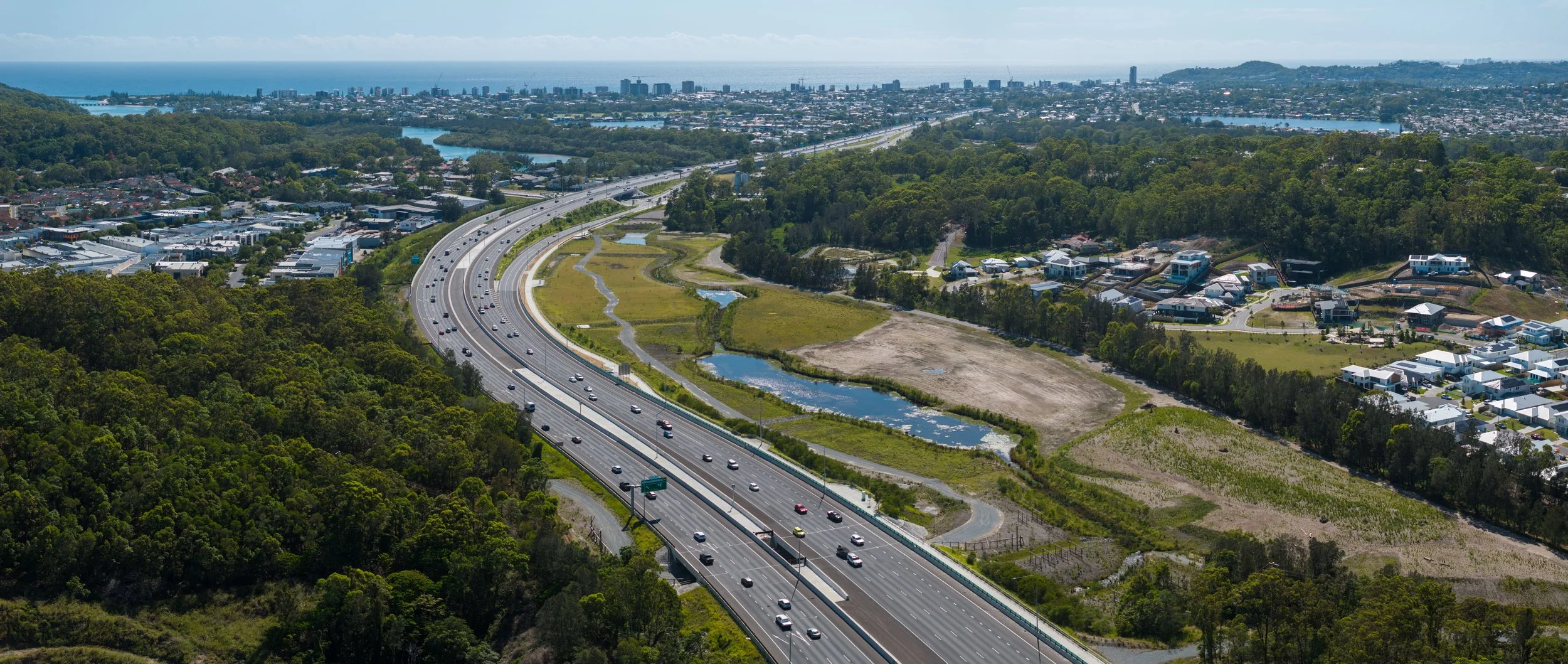
M1 Pacific Motorway and the realigned Oyster Creek. (Image source: TMR)
A Creek on the Move
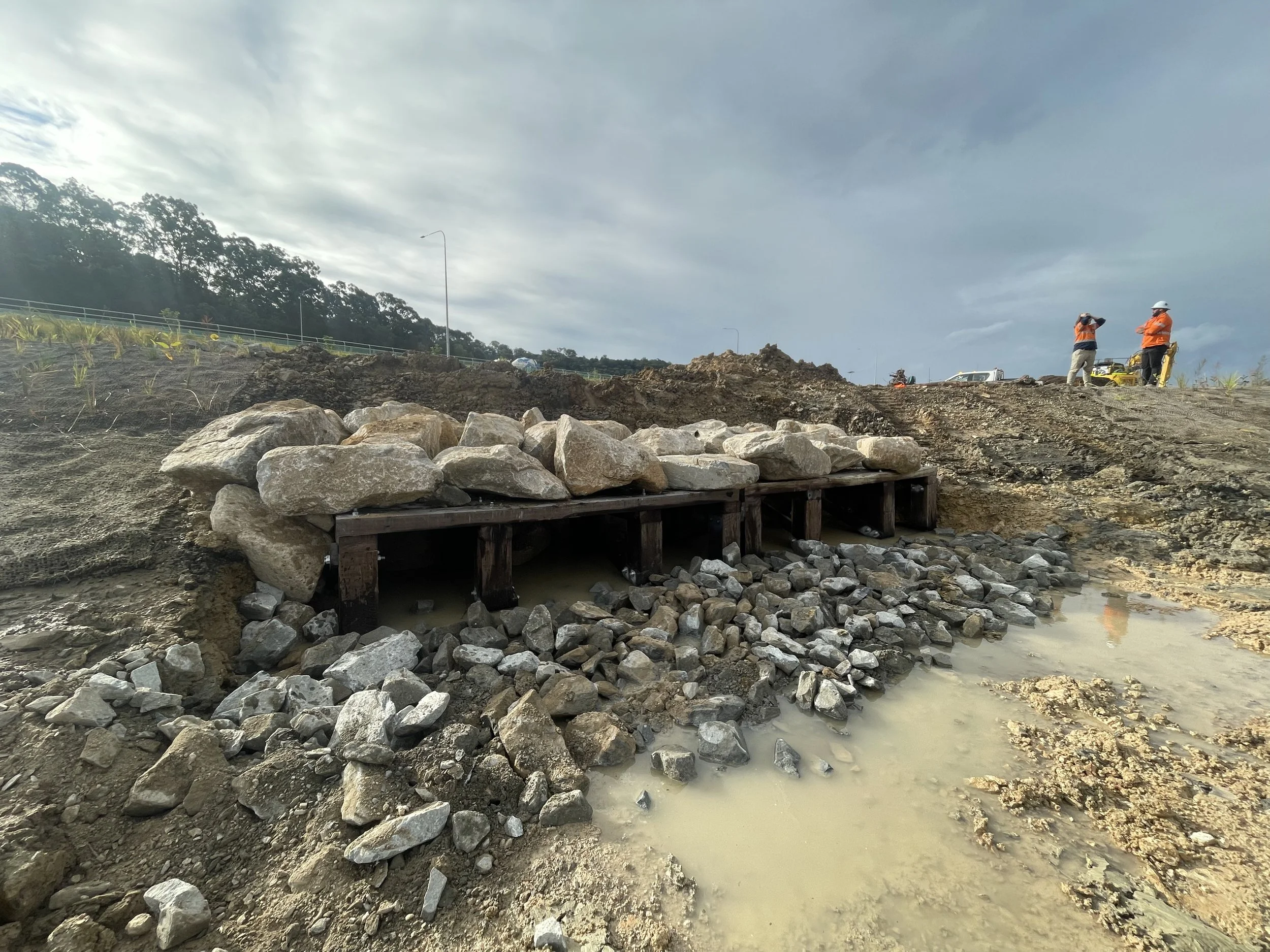
A constructed LUNKER. (Image source: Melinda Scanlon, AFPS)
When the M1 Pacific Motorway upgrade between Burleigh and Palm Beach on the southern Gold Coast, Queensland, Australia, reached the corridor where Oyster Creek flowed, it became clear that this small tributary of Tallebudgera Creek would need to shift. The realignment required an 870-metre diversion upstream of the tidal interface, an intervention that, in decades past, might have produced a straightened, fast-flowing drain built for efficiency rather than ecology. Channels like these scour away substrate and shelter, leaving fish with nowhere to rest, feed, or breed.
But this project unfolded differently. In partnership with the Queensland Government’s Department of Transport and Main Roads (TMR), Australasian Fish Passage Services (AFPS) worked with the project’s design team to re-envision the creek as an extensive, permanent freshwater habitat woven back into the landscape. What began as a civil requirement quickly became an opportunity to show how transport infrastructure and ecology can work together rather than compete.
Why the Realignment Mattered
Old approaches to waterway realignment often prioritised hydraulics and infrastructure footprint over ecological function. Today, Queensland’s waterway regulations make that approach obsolete. Natural streams cannot be replaced with concrete channels or grass-lined drains; any modified reach must be reconstructed to deliver improved fisheries outcomes. The project was also assessed under the Infrastructure Sustainability Council (ISC) rating scheme, in which biodiversity outcomes offer a meaningful opportunity to earn sustainability credits, giving the project team an additional incentive to go beyond minimum compliance.
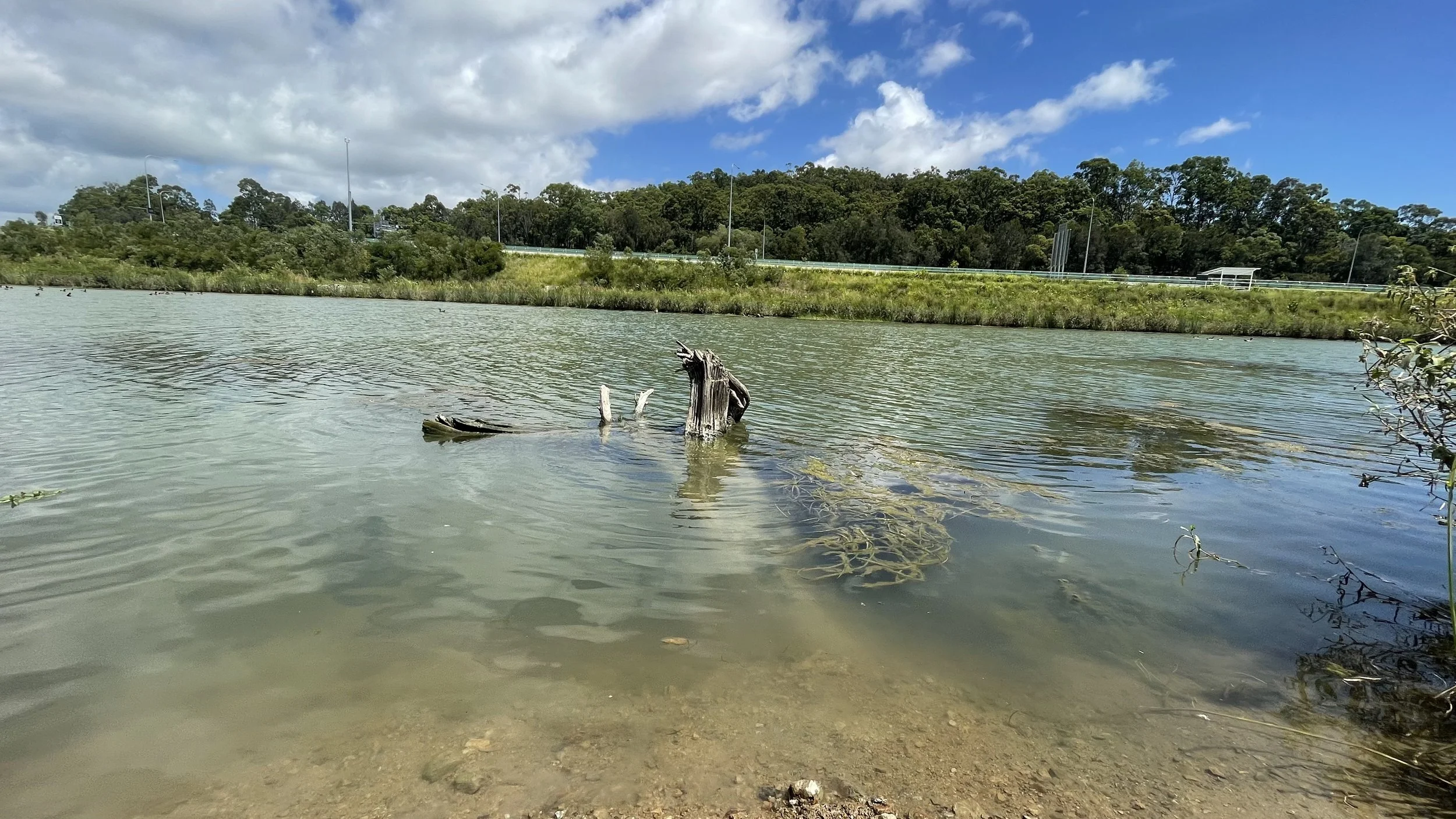
Large woody debris in one of the constructed Oyster Creek ponds. (Image source: Melinda Scanlon, AFPS)
This shift in standards reframed the project. Instead of simply relocating the creek, the team had the opportunity to design a waterway that performed better than the original; one that supported fish passage, habitat complexity, and long-term ecological resilience while still fitting within the constraints of a major motorway upgrade.
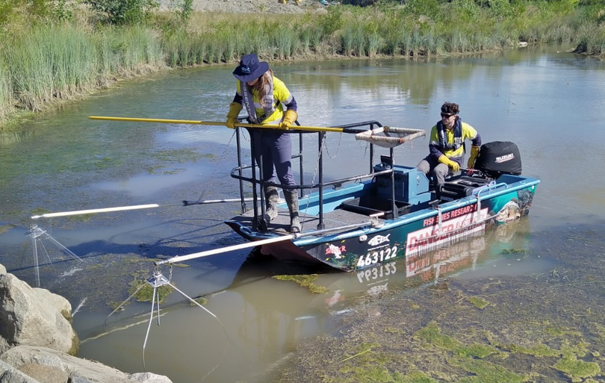
Boat electrofishing in Oyster Creek. (Image source: Rick Haywood, TMR)
Designing a Creek with Purpose
With that opportunity in mind, the project team set out to build a waterway that behaved like a creek, not a drain. Large permanent refuge ponds were excavated and fitted with LUNKERS (artificial undercut banks) and large woody debris to create habitat structure and complexity. These ponds were connected by run habitats stabilised with cross-vanes that shape flow, reduce velocities, and prevent erosion during high-flow events. The alignment itself was sculpted to reflect natural creek morphology, incorporating gentle meanders that restored a more authentic flow path through the corridor.
Throughout construction, ecologists worked side-by-side with civil crews to refine the placement of habitat features, ensuring they were placed exactly where fish would need them. Once the channel was formed, revegetation crews planted native species that replicated the local environment, restoring shading, bank stability, and organic-matter inputs essential for a self-sustaining aquatic system.
A New Waterway Already Alive
As soon as the water began to flow through the new alignment, the team watched closely to see how life would respond. Post-construction monitoring across three survey rounds used boat electrofishing and netting to track the developing fish community, habitat use, and fish passage performance.
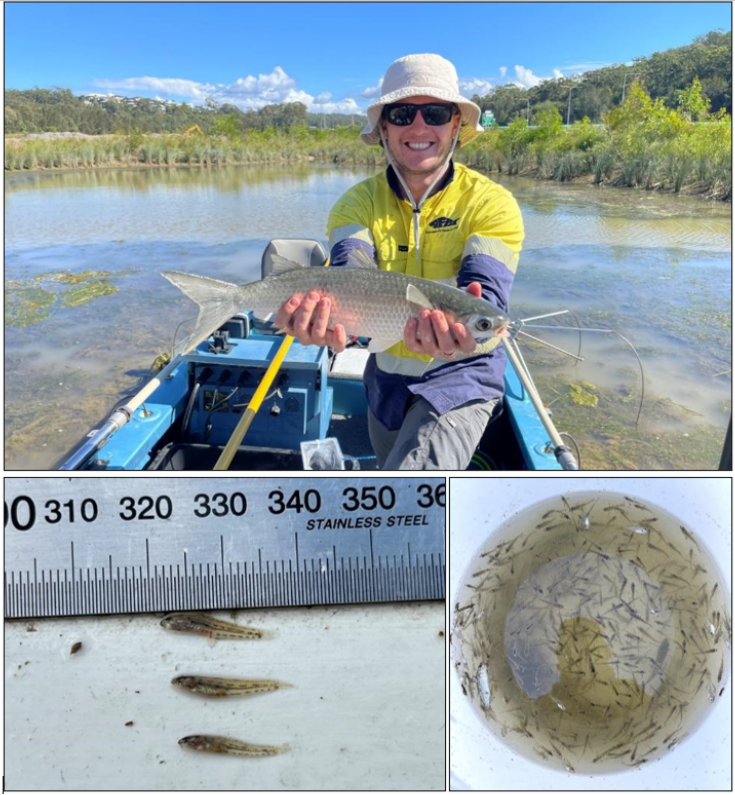
Diversity of fish identified during post-construction monitoring. (Image source: Melinda Scanlon, AFPS)
Before construction, only three native species had been detected. Post-construction, seven native fish species were recorded, including empire gudgeon (Hypseleotris compressa), firetail gudgeon (Hypseleotris gallii), jungle perch (Kuhlia rupestris), longfin eel (Anguilla reinhardtii), sea mullet (Mugil cephalus), spangled perch (Leipotherapon unicolor), and striped gudgeon (Gobiomorphus australis). Individuals ranged from tiny 10-millimetre juvenile gudgeons to a 445-millimetre sea mullet; clear evidence that the channel was supporting both early life stages and larger, mobile species.
Now, during the spring breeding season, gudgeons are amassing to spawn among aquatic macrophytes, signalling successful colonisation and recruitment. A saw-shelled turtle (Myuchelys latisternum) hatchling and a diversity of waterbirds were also recorded using the site. The new creek is not just functioning, it is thriving.
What We Learned Along the Way
The project showed that ecological design works best when it is embedded from the beginning. Early collaboration allowed habitat features to be integrated seamlessly into the engineering design, and ongoing communication during construction helped fine-tune their placement without compromising civil requirements.
There were also some lessons learned. In a few instances, the sequencing of civil works meant habitat and fish passage features were installed later than preferred. Overall, the project highlighted the benefits of early planning and an integrated approach to delivering ecologically functional waterways.
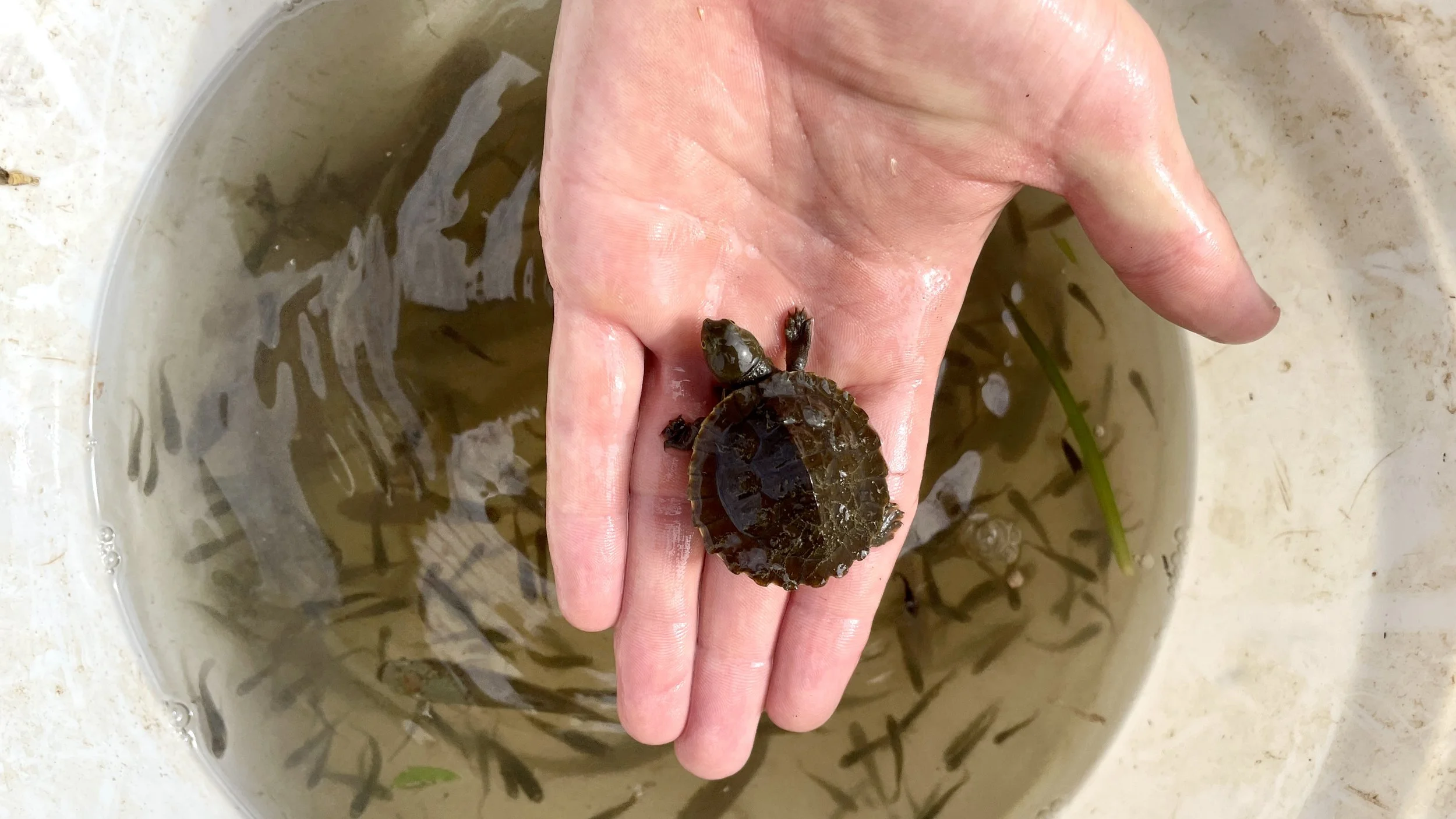
Young saw-shelled turtle. (Image source: Melinda Scanlon, AFPS)
The monitoring results provided powerful validation: when designed with purpose, engineered waterways can rapidly develop into functioning ecological systems that support diverse aquatic communities. Oyster Creek's new alignment stands as a living example of what can be achieved when infrastructure projects embrace ecological thinking from the start and when a large, multidisciplinary team brings it to life. This project involved close collaboration between TMR's project and environmental teams, fisheries scientists, environmental engineers, civil construction crews, revegetation specialists, and ecological monitors, each contributing at different stages to deliver an outcome none could have achieved working in isolation.
Author:
Melinda Scanlon, melinda.scanlon@ausfishpassage.com
Australasian Fish Passage Services: Australasian Fish Passage Services
Melinda Scanlon is a Fisheries Scientist with many years’ experience in project management, aquatic habitat rehabilitation and scientific surveys. Mel has over 20 years’ experience in the fisheries and fish passage fields, having worked for Fisheries Queensland in northern and central Queensland before joining AFPS. Mel has overseen many fish passage projects, including many throughout Queensland, working with regional NRM, council, consulting engineers, infrastructure owners and other bodies to manage projects through the design process, assessment/development, waterway barrier works approvals, implementation, and monitoring phases. Mel has also worked with government agencies in Indonesia, Cambodia and New Zealand to implement training in fish passage ecology. Mel’s fish passage and project management expertise are currently being utilised in a number of fish passage projects throughout Australia and New Zealand.
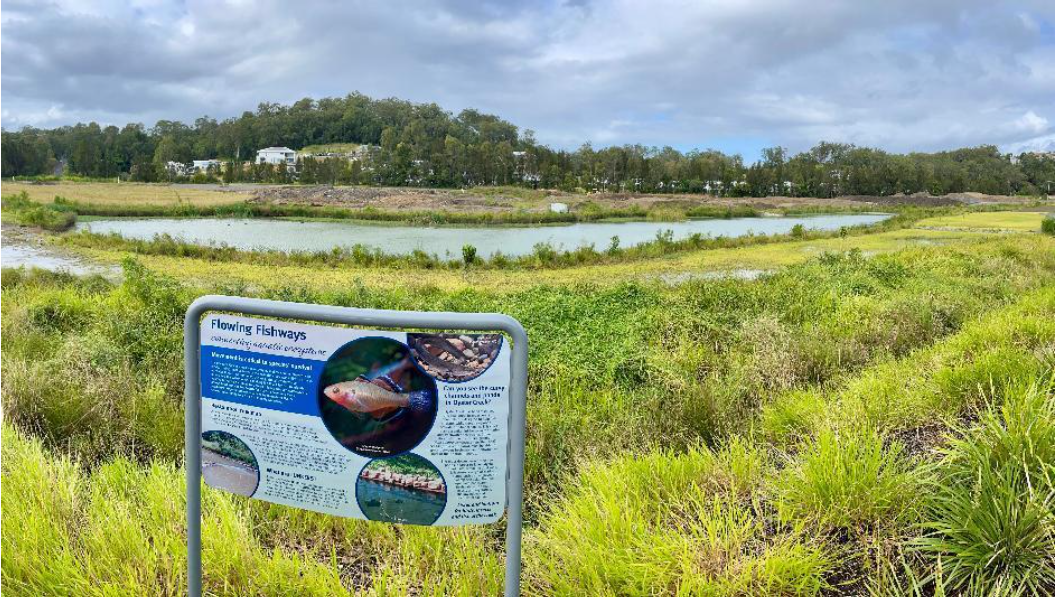
Information signage at Oyster Creek. (Image source: Melinda Scanlon, AFPS)
Edited by: Melissa Butynski
Cite this case study:
Scanlon, M. (2026). When a Creek Had to Move: How Oyster Creek Became a New Kind of Waterway. Edited by Butynski, M. Transport Ecology.info, Accessed at https://transportecology.info/case-studies/oyster-creek-renaturated